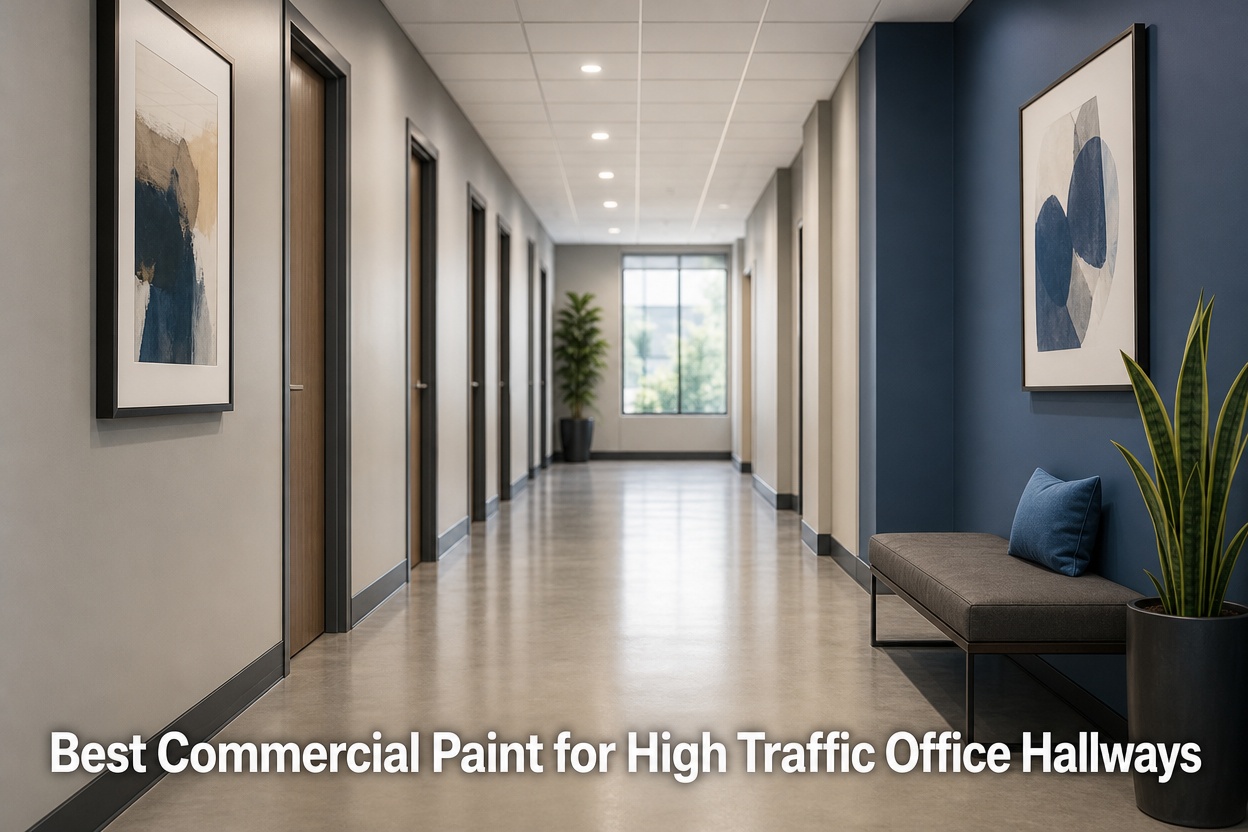
Office hallways take more abuse than any other part of a commercial interior. Rolling carts clip corners, bags brush the walls, shoulders lean on them, and door hardware leaves its mark at the same spots day after day. Paint that looks fine in a conference room can look tired in a corridor within months.
The best paint is the right product, finish and application for your specific building, not a single universal answer. A corridor beside a loading dock needs something different from a quiet executive hallway. This page covers performance traits, sheen, paint types, low-VOC choices, scheduling and ventilation, maintenance, and the factors that drive cost.
We are LVS Custom Paints, a South Jersey commercial and residential painting contractor. Our crew handles interior and exterior painting, cabinet refinishing and epoxy floors, and we apply the products we recommend.
What Makes a Paint Right for a High-Traffic Office Hallway
The EPA recommends choosing paint based on both VOC content and the performance the job requires, including hiding ability and durability. That two-part test is a useful frame for any hallway. A paint with excellent emissions numbers but poor wear is the wrong choice, and so is a tough coating that fills a occupied building with fumes.
Start by listing what your corridor actually faces. Then match the product to those demands, not to a catalog headline.
| Hallway Demand | What to Look For |
|---|---|
| Constant contact and scuffing | Durable, scrubbable coating |
| Frequent cleaning | Finish that tolerates washing |
| Dark or patched walls | Strong hiding ability |
| Occupied building | Low-VOC formulation, planned ventilation |
| Uneven lighting | Sheen suited to wall condition |
Think of the table as a starting checklist. Each row connects to a decision covered below, and the right answer shifts from building to building.
Durability, Scrubbability and Hiding Ability
Durability describes how well the dried film resists scuffs, dings and wear. Scrubbability describes how it handles repeated cleaning without burnishing, thinning or losing color. Hiding ability is how well a coat covers what is underneath, which matters in hallways where prior colors, patches and touch-up areas are common.
The manufacturer’s technical data sheet is where these traits are described, along with recommended primers, film thickness and recoat windows. We read those sheets before we recommend anything, because marketing claims on a can rarely tell the whole story.
No paint will never scuff, stain or need touch-ups. A good product slows the wear and makes repairs easier, and that is the realistic goal.
Why Surface Prep and Traffic Patterns Matter as Much as the Product
Even the best coating fails on a poorly prepared wall. Surfaces need cleaning to remove oils and residue, patching where hardware or furniture has gouged the drywall, and priming where the existing coating is stained, glossy or uneven. The condition of the old paint matters too, since peeling or chalky film will take the new coat down with it.
Traffic patterns shape results just as much. Consider:
- How often carts, deliveries or equipment strike the walls
- Where people bunch up, such as near elevators and break rooms
- How the janitorial team cleans, and with what products
- Whether corners and door frames need added protection
Walk the corridor at a busy hour before choosing anything. The scuff marks tell you where the wear really lands.
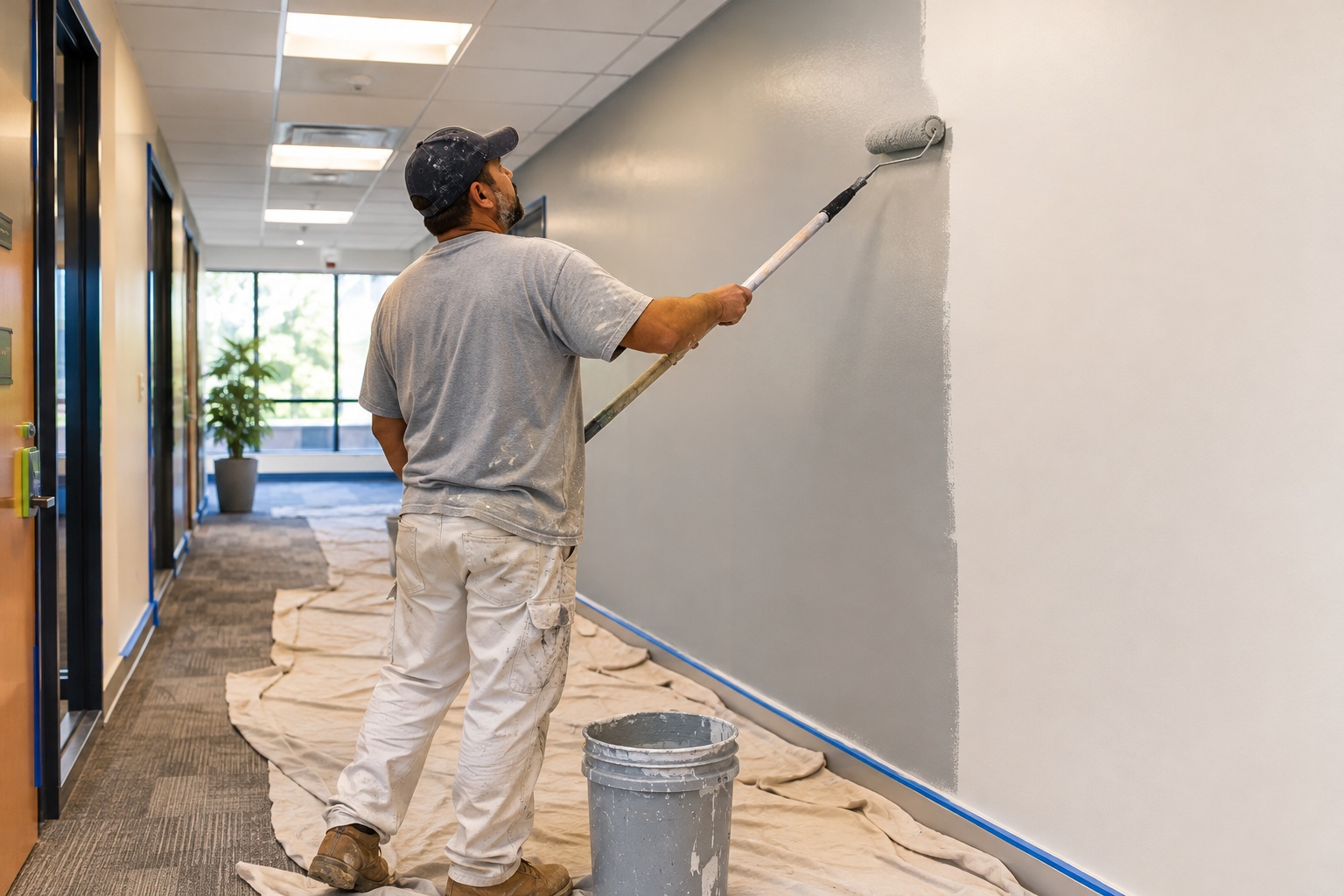
Choosing a Finish: Eggshell, Satin, Semi-Gloss and Flat
No sheen is universally best, and the right one depends on your cleaning routine and how you want the walls to look. Here is how each behaves in practice.
- Flat: Hides wall imperfections well and gives a soft, quiet look, but it generally shows marks and can be harder to clean without leaving burnish spots.
- Eggshell: A low sheen with a gentle glow. It balances appearance and washability and is common in offices that want a refined look.
- Satin: A bit more sheen and typically more cleanable than eggshell, with more of a visible glow under hallway lights.
- Semi-gloss: The shiniest of the group and usually the most wipeable, often used on trim, doors and frames.
Many corridors use more than one sheen. Walls might take eggshell or satin, while trim and doors take semi-gloss to stand up to hands and hardware.
Your cleaning habits matter here. A team that wipes walls weekly has different needs from one that cleans only when something spills. Always check the manufacturer’s care guide for what cleaning methods a given finish tolerates.
Finish and Cleanability: What Shows Scuffs and What Wipes Clean
People often ask which finish is easiest to clean without showing scuff marks. Higher sheens tend to resist marking and wipe clean more readily, because the smoother surface gives dirt less to cling to. The tradeoff is that glossier finishes can also show wall flaws, roller texture and sheen variation across a long hallway.
Lower sheens forgive imperfections but can be harder to clean. Wiping a flat wall may leave a polished patch that catches the light differently, and that patch is hard to hide.
So the answer is a balance, not a single winner. Verify the scrub and stain resistance details on the technical data sheet, then weigh them against the condition of your walls. We usually recommend testing a sample patch in the hallway itself so you can see the result under real lighting before committing to a full corridor.
Matching Sheen to Wall Condition and Lighting
Hallway lighting is often a mix of overhead fixtures, emergency lights and daylight from the ends of the corridor. Glossier finishes reflect that light and make every dent, seam and patch more visible. Raking light from a window at the end of a corridor can be especially unforgiving.
If your walls have visible repairs, uneven texture or older drywall work, a lower sheen can help hide the flaws. Be aware that lower sheens may need more careful cleaning to avoid shiny spots or marks.
Better surface prep lets you consider higher sheens with confidence. Smooth, well-skimmed walls can carry a satin finish nicely, while rougher walls often look better in eggshell.
Paint Types and Formulations for Commercial Corridors
Commercial-grade paint lines from the major manufacturers are built for heavier use than standard residential products. They often offer tougher films, better stain resistance and formulations aimed at facilities with frequent cleaning. Beyond that, the differences between lines are real but depend on the product and the job.
We describe these options honestly and without brand loyalty. The right choice depends on your building, the existing surface, your cleaning practices and your tolerance for downtime.
Product selection is part of the professional job. We recommend and apply products on site, because even a well-chosen paint performs poorly if it is mixed, rolled or cured incorrectly. Matching the product to the wall, the traffic and the schedule is something our crew does on every commercial corridor.
Water-Based Acrylic Latex Versus Solvent-Based Coatings
According to the EPA, water-based acrylic latex paints are generally lower in VOCs than solvent-based paints, and they clean up with water. That makes them the usual choice for occupied offices, where odors and emissions are a concern.
Modern acrylic latex formulations are tough enough for most corridor walls, and they dry quickly, which helps with tight schedules.
A solvent-based or specialty coating may still be considered in certain cases, such as particular trim applications, tricky substrates or conditions where a manufacturer specifically calls for one. Those products usually bring stronger odors and longer ventilation needs, so the decision should weigh performance against the impact on people in the building.
Where Specialty and Washable Product Lines Fit
Many manufacturers offer scuff-resistant, washable or stain-blocking lines designed for busy interiors. In general terms, these products use tougher resins or added additives to improve wipeability and resist marks. They can make sense for corridors that see heavy wear or frequent cleaning.
Check the technical data sheet for claims about scrub resistance, cleaning methods and recommended primers. Those details vary by product.
Buying a premium washable line does not replace good prep or proper application. Specialty products often have specific requirements for film thickness and cure time, which is part of why a professional crew gets better results.
Low-VOC and Zero-VOC Paint in Occupied Offices
VOCs matter indoors because the EPA identifies paints and lacquers as sources, and many indoor VOC concentrations are consistently higher than outdoor ones, sometimes up to ten times higher. In an office, that means people spend their workdays breathing whatever the building holds.
Choosing a lower-emitting paint is a sensible step, particularly when painting happens around staff. It reduces the load on the building’s air during and after the job.
It does not remove the need for planning. Low-VOC paint still calls for ventilation and thoughtful scheduling, and it works best as one piece of a broader plan covered later in this page. Low-VOC is a reduction in emissions, not a guarantee of zero impact.
What the EPA Says About VOCs and Performance
EPA guidance recommends specifying the least-toxic formaldehyde-free, zero-VOC or low-VOC paint that still meets durability and other performance requirements. The key phrase is “still meets.” Emissions and durability are weighed together, not traded off blindly.
For reference, EPA building-code guidance lists maximum VOC levels of 50 g/L for flat interior wall and ceiling paints and 150 g/L for non-flat paints. Treat those as examples only. Actual limits vary by jurisdiction, product category and certification program.
Zero-VOC also does not automatically mean odor-free, emission-free or the most durable option. Composition and performance still matter, so read the product data and not just the label claim.
Is Low-VOC Paint Durable Enough for a Hallway?
Often, yes. Many low-VOC products are built for commercial use and carry the scrub resistance and stain performance that corridors demand. Their formulations have improved considerably.
Still, not every low-VOC paint is equal. Verify the technical data sheet and weigh it against what your hallway actually faces, including impact, cleaning frequency and wall condition.
This follows the EPA’s point that selection should balance emissions and performance. A low-VOC product that meets your durability needs is a strong choice for an occupied building, and we steer clients toward that balance on every corridor.
Planning the Job Around Your Building and Your People
Scheduling, ventilation and sequencing belong in the paint decision, not after it. A great product applied at the wrong time or in a stuffy building can create more problems than it solves.
Low-VOC paint does not eliminate the need for ventilation or for scheduling work around occupants. It reduces emissions, but people still notice odors, and sensitive individuals may react to even modest levels.
Good planning treats the building as a whole. That means coordinating with facility managers, understanding the HVAC system and thinking through what else is happening in the space. The sections below walk through the main pieces.
Scheduling Work During Low-Occupancy Periods
The EPA recommends scheduling interior painting during unoccupied periods or periods of least occupancy when possible. That simple step cuts exposure and keeps the workday running smoothly.
Options worth discussing include:
- Evening work after staff leave
- Weekend painting when the office is quiet
- Phased sections, so only part of a corridor is affected at a time
The right option depends on your operations, security needs and how quickly the space has to reopen. We plan around those realities with you.
Ventilation During and After Painting
Running the HVAC system and flushing the building with fresh air during application helps clear fumes. Paint choice is not the only control, and ventilation does a lot of the work.
The EPA recommends supplemental spot ventilation for at least 72 hours after interior painting. The EPA also notes that emissions can be temporarily higher after renovation and decline substantially over the following months.
People often ask how long an office should be closed after painting. There is no single answer. Re-entry timing depends on ventilation, drying, product directions, building conditions and occupant sensitivities, so no hallway should be promised safe to occupy the moment the last coat goes on. We plan that window with your facility team.
Moisture, Humidity and Sequencing with Carpet, Ceiling Tile and Other Finishes
Damp walls and condensation hurt coating performance and can lead to mold. The surface and the building environment matter alongside the product, so any moisture problem should be solved before painting begins.
Sequencing matters too. Wet, high-emitting products like paint should go on before absorbent materials such as carpet, ceiling tile and fabric are installed. Those materials soak up VOCs and can re-release them later.
Paint, adhesives, sealants, flooring and wall materials also work best planned together as one finish strategy. Coordinating the order of trades keeps emissions down and protects new finishes from damage.
Planning for Maintenance and Repaint Cycles
Choose finishes with upkeep in mind. Know which cleaning methods the paint tolerates, make sure touch-up areas are easy to reach, and keep leftover paint labeled and matched to the original batch so repairs blend in.
Repainting cycles in busy corridors affect long-term air quality and disruption. A more durable, easier-to-clean finish can stretch the time between full repaints, which means fewer interruptions for your staff.
Entry mats and barriers are a simple way to reduce the dirt and grit that reach hallway walls and floors. Less tracked-in debris means less wear and less cleaning, which helps the paint last.
What Drives the Cost of Painting an Office Hallway
Several factors move the price of a corridor project:
- Wall condition, including patching and prep work
- Product tier, from entry level to mid range to premium commercial lines
- Number of coats and primer needs
- Trim, doors and frames included in the scope
- Working hours, since evening and weekend schedules affect labor
- Length, height and access of the corridor
Choosing a higher tier product often raises the material cost but can lengthen the time between repaints.
Conclusion
The right paint for a busy office corridor comes from matching durability, sheen, formulation and emissions to your building and your people. Surface prep, scheduling, ventilation and sequencing carry as much weight as the product in the can.
Water-based acrylic latex and low-VOC formulations suit most occupied offices, and a thoughtful sheen choice balances cleanability against how your walls look under real lighting. No paint is scuff-proof, but good planning makes wear easier to manage.
The best results come from a professional job done right, with the preparation, product knowledge and careful application that corridors demand. That is the standard our crew works to on every commercial hallway.
Ready to see what fresh paint does for your home? Call LVS Custom Paints at (609) 778-7451 or request a free estimate.
Frequently Asked Questions
What is the best paint for a high-traffic office hallway?
There is no single best paint. Look for a commercial-grade product with strong durability, scrubbability and hiding ability, and confirm the details on the manufacturer’s technical data sheet. Pair it with proper prep and a sheen suited to your walls.
Is eggshell or satin better for commercial hallways?
It depends on your cleaning routine and wall condition. Satin typically wipes clean more easily but shows flaws more, while eggshell is more forgiving of imperfections. Neither is universally better, so check the product data and test a sample patch.
How long should an office be closed after painting?
No fixed time fits every building. Re-entry depends on ventilation, drying, product directions, building conditions and occupant sensitivities. The EPA recommends supplemental spot ventilation for at least 72 hours after interior painting, and scheduling work during low-occupancy periods helps reduce disruption.